
Oregon County Release Dates: Scheduled and Actual
A projected or calculated date is a planning point based on the sentence and the information then in the record. An actual release date records a completed custody event. Those are not interchangeable. For a Missouri state sentence, the documented fields include a calculated minimum release date and a maximum sentence expiration date. The minimum date is closer to the earliest current statutory release point, while the maximum date is the endpoint of that sentence row. A person can also have parole eligibility, a conditional-release date, a board-set date, and a later actual release event.
Oregon County Jail presents a different problem. A pretrial detainee usually has no sentence from which to calculate a projected release. The person might leave after bond is posted, a judge enters an order, charges are resolved, or another agency takes custody. Even when a judge acts, the jail must process the order, check identity, review warrants and holds, and complete the transfer or release. The court date, jail exit time, and data-system update can therefore differ.
How to Find an Oregon County Release Date
Start with the last known custodian, not with a broad assumption that every person belongs in the same database. The Oregon County Sheriff controls the local jail record. MODOC controls state-prison sentence and supervision records. Missouri Courts supplies the judgment and docket that explain the legal authority behind a county or state custody event.
- Identify whether the person was last held at Oregon County Jail or in a MODOC institution.
- For an Oregon County case, search official Missouri Case.net and match the court, cause number, name, and available identifiers.
- Read the docket and judgment for bond, jail-time credit, sentence, probation, commitment, warrant, or amended-order entries.
- For state custody, search MODOC by DOC ID when possible; otherwise use the full last name and enough first-name detail to narrow the result.
- Compare the DOC number, birth details, offense county, sentence county, and cause number before relying on any date.
- Ask the current custodian or assigned caseworker what the displayed date means and whether a hold, consecutive term, or pending decision affects it.
- For the exact completed exit, request the custody or release event from the agency that physically held the person.
The broader Oregon County released-inmate search and records guide explains how Case.net, the sheriff, and receiving-agency records fit together when custody has already ended or moved.
Note: A person missing from one search may have transferred, reached final discharge, or been excluded from public display.
MODOC Release Date Lookup for Oregon County Cases
The official MODOC Offender Search is the right first portal for someone serving an Oregon County sentence in the state system. It is not a historical Oregon County booking index. Someone who bonded out of the county jail without entering state custody may never appear there. The portal also states that its name search covers active offenders, including probationers and parolees, but does not provide information on discharged offenders.
This captured MODOC search screen shows the official entry point and its search fields:
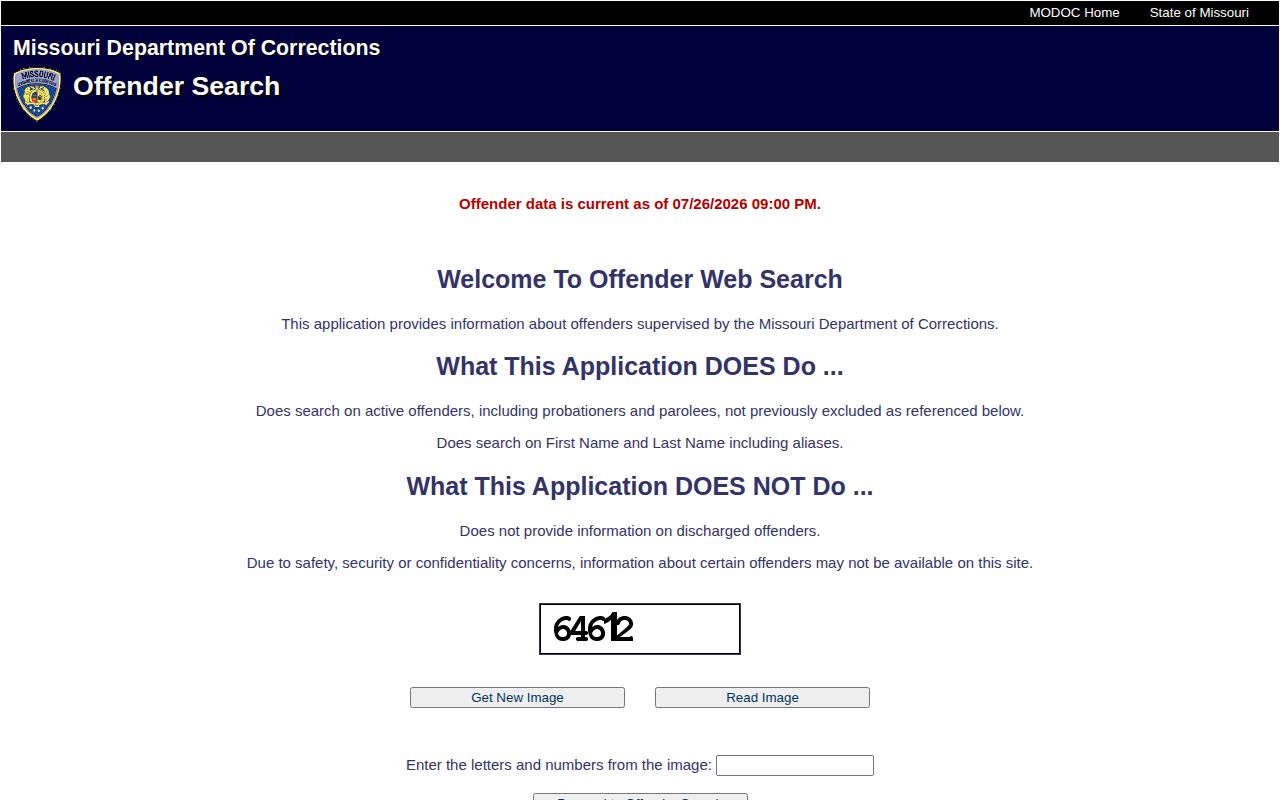
Use a DOC ID when one is known. A name-only match is not enough because aliases, suffixes, and common names can lead to the wrong record. An Oregon County cause number provides a strong cross-check because the MODOC data dictionary includes cause number, offense county, and sentence county fields.
Read assignment and status with the sentence data. A prison assignment shows current incarceration. A field-supervision assignment may mean the person is in the community but remains under MODOC jurisdiction. A completed flag applies to a sentence row, not necessarily to every sentence or to the department's entire jurisdiction over the person. Consecutive rows and separate probation matters can remain active after one row is complete.
Minimum and Maximum Oregon County Release Dates
MODOC's official public-data dictionary defines Sentence-I Minimum Release Date as the calculated minimum date on an active sentence. The department glossary associates the minimum release date with conditional release. The dictionary separately defines Sentence Maximum Release Date as sentence expiration. These labels should be kept intact. A minimum date must not be relabeled as the actual day of exit, and a maximum date must not be mistaken for the only possible release point.
The MODOC Sunshine Law page and public-data dictionary document the source fields used to interpret an Oregon County state sentence:
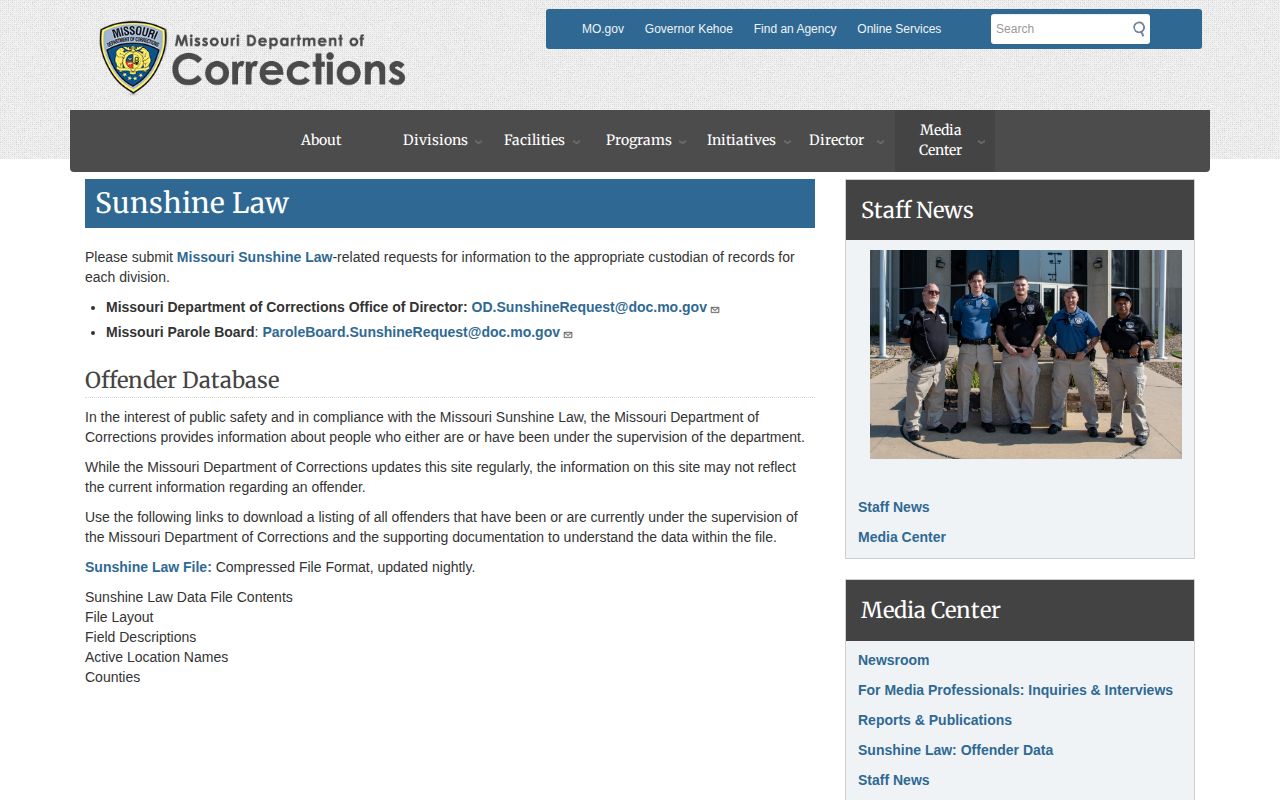
The dictionary is also the route to historical data when the active-only name search no longer returns a finally discharged person. MODOC describes that historical and current database as charge-based, updated nightly, and containing records as early as 1974. A focused agency request is still better when one disputed release event or final discharge must be verified.
| Date or status | What it means |
|---|---|
| Minimum release date | The calculated minimum point on an active sentence, not proof of physical release. |
| Maximum release date | The expiration date for that sentence row. |
| Parole eligibility | A point at which board consideration may be lawful, not a promise of parole. |
| Conditional release | A statutory supervised portion after the prison term for qualifying sentences. |
| Actual release event | The completed event, type, date, and destination recorded by the custodian. |
| Final discharge | The end of jurisdiction for the applicable sentence or supervision term. |
Note: A completed sentence row does not prove that every consecutive sentence or separate supervision matter has ended.
Oregon County Jail Credit and Release Dates
For a sentenced county-jail prisoner, the calculation begins with the judgment, the sentence commencement, and qualifying credit for time already spent in custody. Missouri section 558.031 directs credit for related time in prison, jail, or custody after the offense and before sentence commencement. The statute relies in part on sheriff certification.
That detail has a direct Oregon County connection. The sheriff's administration page identifies the records custodian as the official who certifies inmate time and paperwork for MODOC. A careful check therefore uses the court judgment for the imposed term and the sheriff's credited-time certification for the custody counted toward it. Current hold information also matters because a second warrant or receiving-agency detainer can prevent an expected exit to the community.
No Oregon County good-time schedule or weekend-release policy was found in the official sources reviewed. A reader should not subtract a guessed number of days or assume that a date falling on a weekend will be moved. Ask the sheriff and court clerk about the specific judgment, certified credit, and any active hold.
Note: A bond or release order can authorize release before the jail completes its final hold and paperwork checks.
Missouri Rules Behind Oregon County Release Dates
Missouri section 558.011 divides many qualifying felony sentences into prison and conditional-release terms. For terms of nine years or less, the conditional-release portion is one-third. For terms over nine through fifteen years, it is three years. For terms over fifteen years, it is five years. The prison portion is the remainder. Dangerous felonies and fourth-or-subsequent MODOC remands are excluded from that standard division, and the Parole Board may extend the prison term through the statutory process for institutional violations.
Conditional release is supervised release, not final discharge. Its calculation can interact with consecutive sentences, mandatory minimums, jail credit, required programs, and a lawful extension. This is why a simple sentence length rarely gives a safe answer to the question of when an Oregon County offender will leave a state institution.
Missouri section 558.041 allows additional institutional credit on the superintendent's recommendation for qualifying conduct and program participation under department policy. Credit can be rescinded, and a violation can result in loss of some or all credit. It applies to the sentence being served and is not a universal daily deduction.
Prison good time must also be kept separate from earned compliance credit under section 217.703. Earned compliance credit can reduce eligible community-supervision time after release. It does not calculate the day a person leaves prison.
Note: Missouri publishes no universal credit formula that can safely replace a case-specific MODOC calculation.
What Changes an Oregon County Release Date
A release calculation can move because the legal sentence, credited time, institutional record, or destination changes. The safest reading is a snapshot: it describes what the official system calculates from the data and decisions entered at that time.
| Factor | Possible effect |
|---|---|
| Jail-time credit correction | Adds or corrects certified credit and changes the sentence calculation. |
| Consecutive sentences | Adds minimum terms and can leave custody active after one row ends. |
| Mandatory minimum | Delays eligibility even when another guideline points to an earlier date. |
| Good-time award or loss | Changes qualifying institutional credit under statute and department policy. |
| Institutional violation | May cause loss of credit or a lawful extension toward the full term. |
| Parole Board action | May set a future date, deny release, or schedule a later review. |
| Detainer or warrant | Can turn an expected community exit into transfer to another custodian. |
| Amended court order | Changes the sentence or the legal authority for custody. |
| Required programming | Noncompletion can affect conditional release in specified cases. |
Missouri's 85 percent rule in section 558.019 is especially easy to misread. It generally requires a person serving a covered dangerous-felony sentence to serve 85 percent of the court-imposed term, or meet the statute's age and service threshold, before eligibility for parole, conditional release, or another early release. That point is an eligibility floor, not an automatic release day. The same statute contains separate percentages for specified covered non-dangerous felonies based on prior prison commitments, along with offense, date, and exception language.
Why Oregon County Release Dates Do Not Collapse into One Number
Missouri keeps several dates because each answers a different legal or operational question. The calculated minimum concerns an active sentence. Maximum expiration marks the end of a sentence row. Parole eligibility concerns when board release may be considered. Conditional release identifies a statutory supervised phase. Actual release records what the custodian finally did. Final discharge ends the relevant state jurisdiction.
The distinctions become critical when an Oregon County sentence includes more than one row or when release from prison leads to supervision. One completed row does not prove all custody has ended. Likewise, reaching 85 percent does not command the gate to open. Good-time credit can change a qualifying institutional calculation, while earned compliance credit works later on eligible community supervision. Combining those mechanisms into a single homemade date produces a result the official records do not support.
Confirm an Oregon County Release Date
For a local jail event, call the Oregon County Sheriff's Office at 417-778-6611 and ask whether the person remains confined, what release category was recorded, and whether another agency received the person. For state custody, direct a status question to the institutional caseworker or probation and parole field officer. When the active MODOC portal no longer returns a discharged person, use the Sunshine database or request the actual release event, type, date, sentence status, and final supervision assignment.
A Missouri Sunshine request should identify the person with full name, DOC ID when known, appropriate birth information, and the Oregon County cause number. Section 610.023 requires the public body to respond as soon as possible and no later than the end of the third business day by supplying the record or explaining the cause of delay and the earliest time and place it will be available. That is a response rule, not a guarantee that every record will be produced in three days.
For a pending custody change, the VINE Inmate Check can provide a Missouri notification route. Use it as an alert and corroboration tool, then confirm the exact event with the sheriff or MODOC because participating-agency data can lag.